Intro
A personal job tracker built to do one thing: surface the right roles without the noise. It runs automatically every morning, scans job boards for postings that match my criteria, and delivers a list I can actually act on — with AI insight that knows who I am.
Year
/
2026
Tool
/
Claude Cowork
Problem
The job tracker market is surprisingly bad for what it promises to do. Most tools are good at storing jobs you've already found, and not much else. The AI features tend to be the worst part — they lose context between sessions, extract requirements incorrectly, and manufacture urgency signals that don't hold up when you look closely. Teal has a clever browser extension concept, but it breaks on any site that renders listings through JavaScript, which is most of them.
The deeper problem is that these tools are built for everyone, which means they're optimized for no one in particular. They don't know what I actually care about, what my background is, or how to weigh a compelling company against a salary band that doesn't work.
Insight
Most job trackers solve the wrong problem. They help you organize applications you've already decided to make. What I actually needed was help deciding which ones were worth my time in the first place.
That distinction changed what the tool needed to do. The useful version wasn't a better filing system — it was a filter with judgment.
Approach
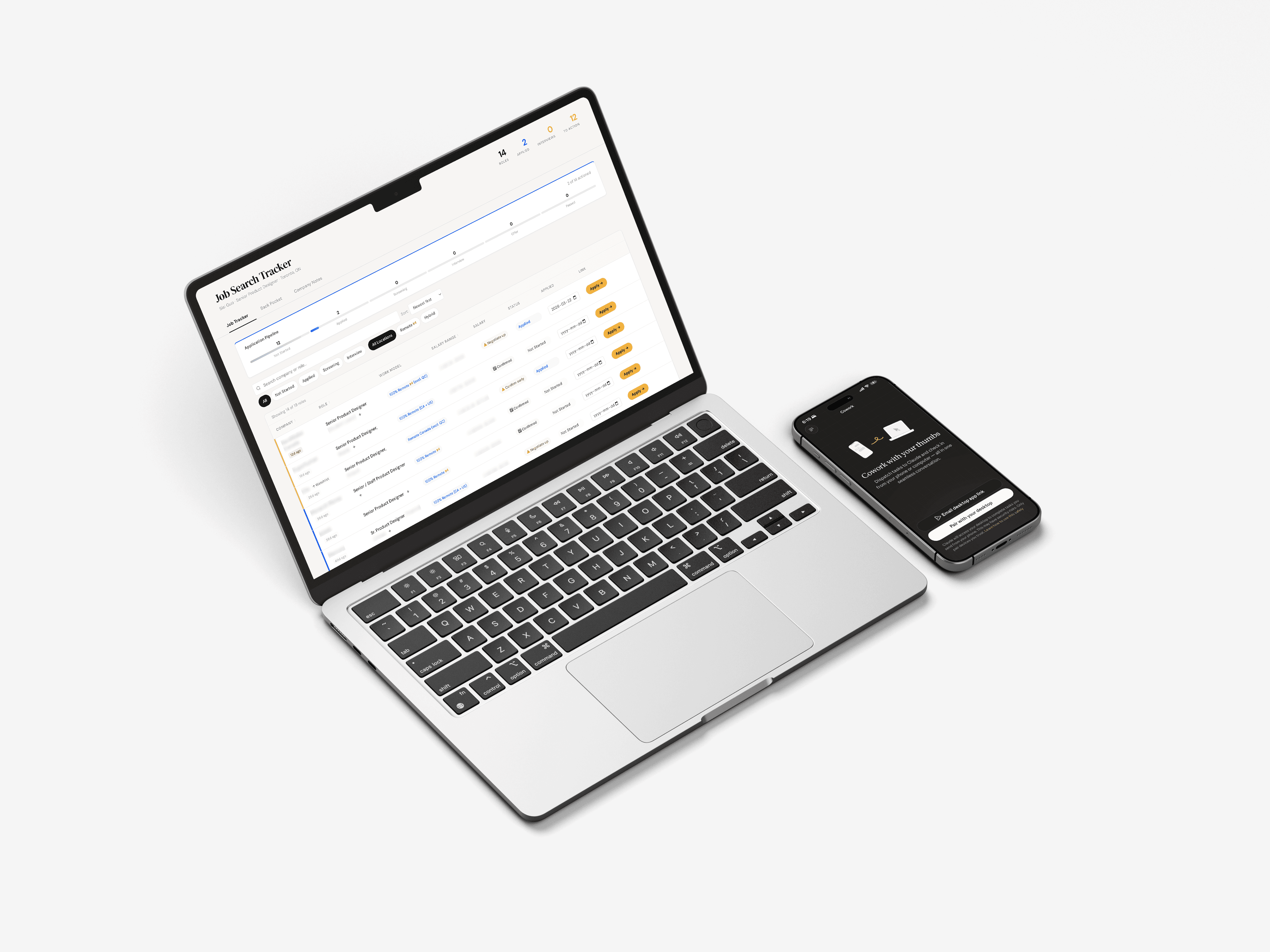
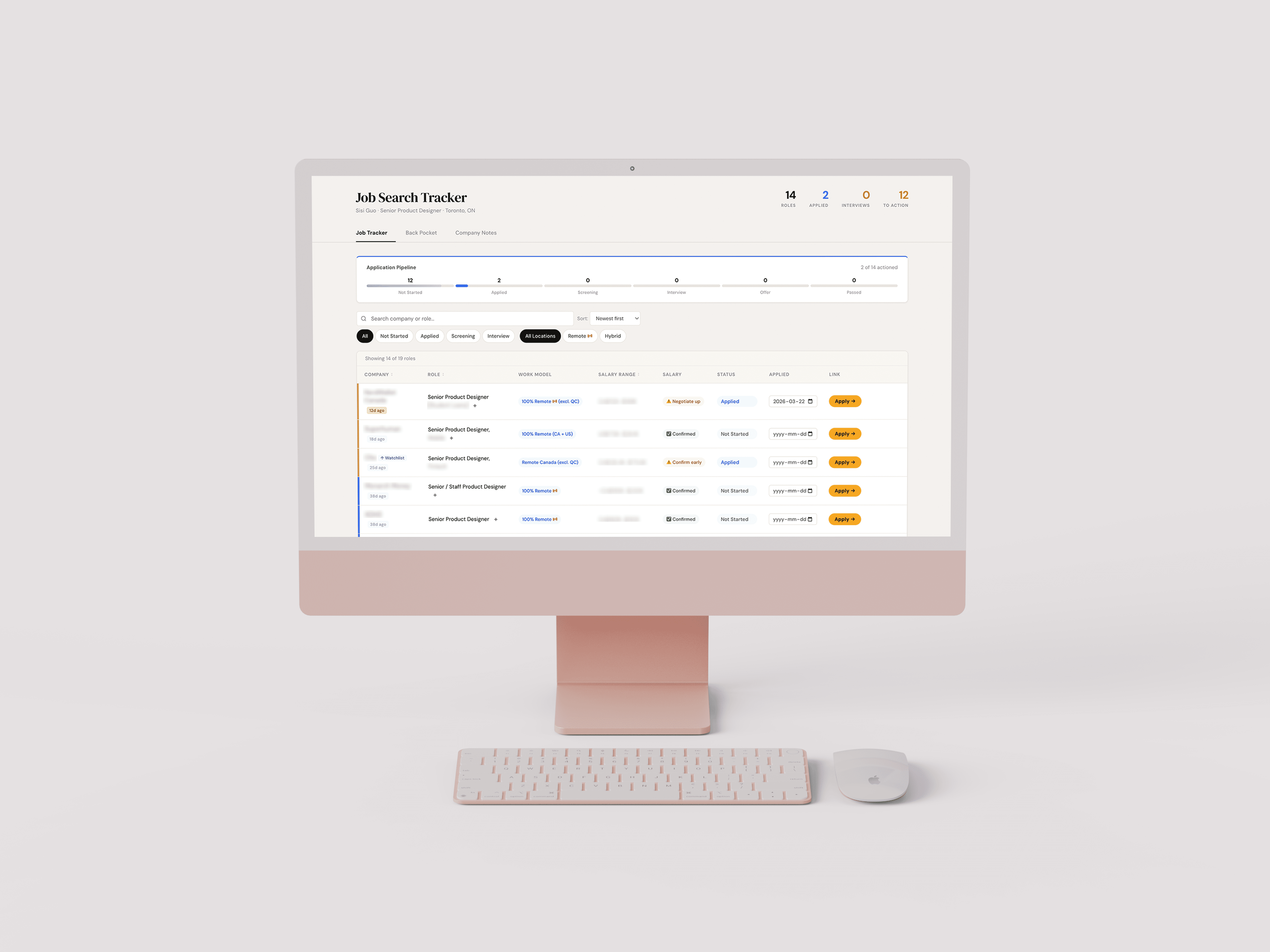
I started by telling Claude my search criteria and background and had it scaffold the structure. From there I set up a daily scheduled task that runs automatically: it scans job boards each morning, filters for postings from the last 24 hours that match my qualifiers, and adds them to the tracker. I open it and the list is already there.
Building it meant working through different Claude skills along the way — the scheduled task setup, the evaluation logic, the dispatch flow. Each piece was its own small experiment, which is part of what made it interesting to put together.
Three things shaped how it feels to use.
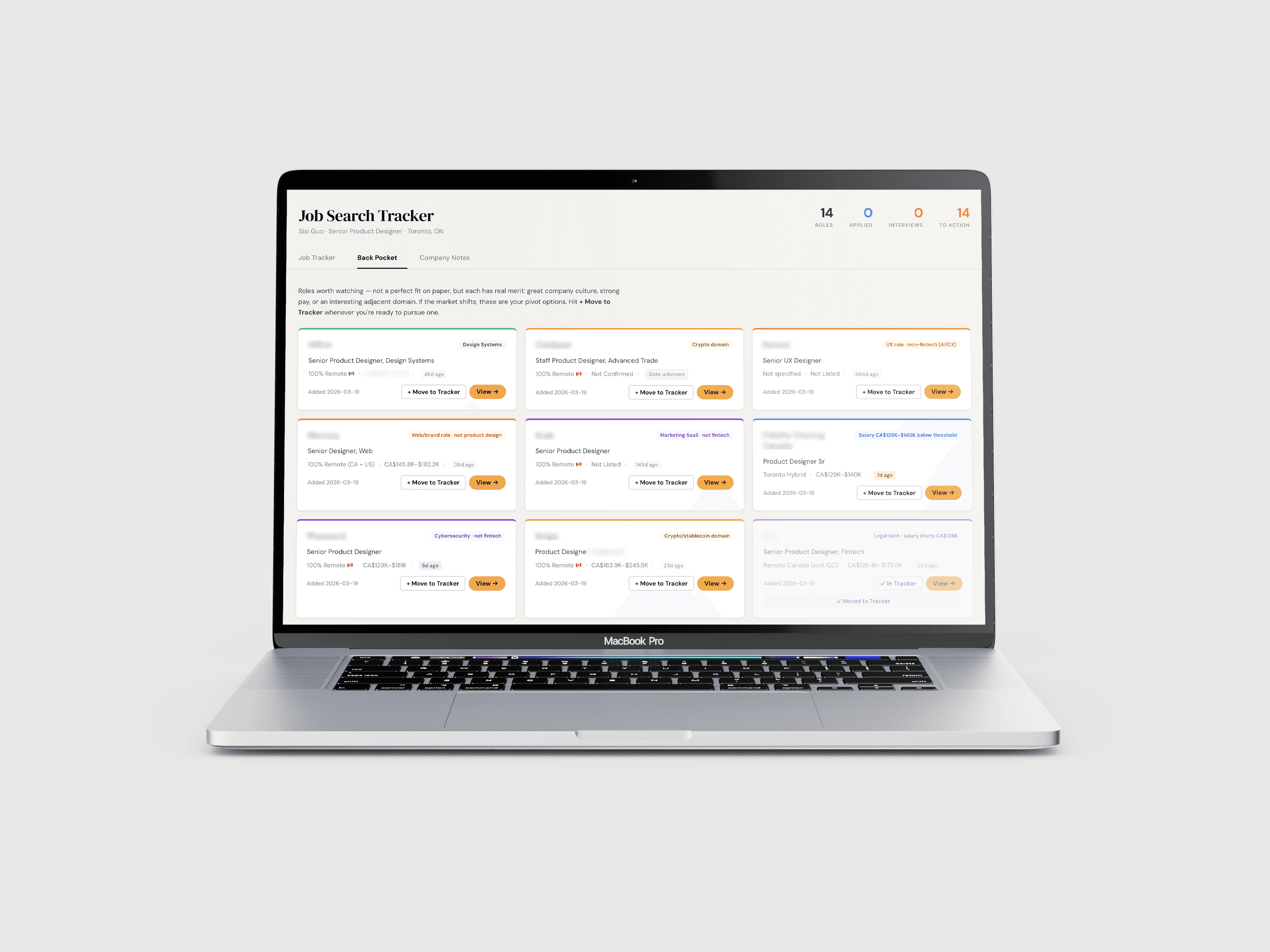
The first was the back pocket. Not every interesting job fits neatly into yes or no. Sometimes a role has a lower salary band than I'd want but the company is genuinely interesting. Sometimes the domain is unfamiliar but the team or stage is compelling. The back pocket is a holding space for those — not rejections, not priorities, just things I want to keep in view without cluttering the main list.
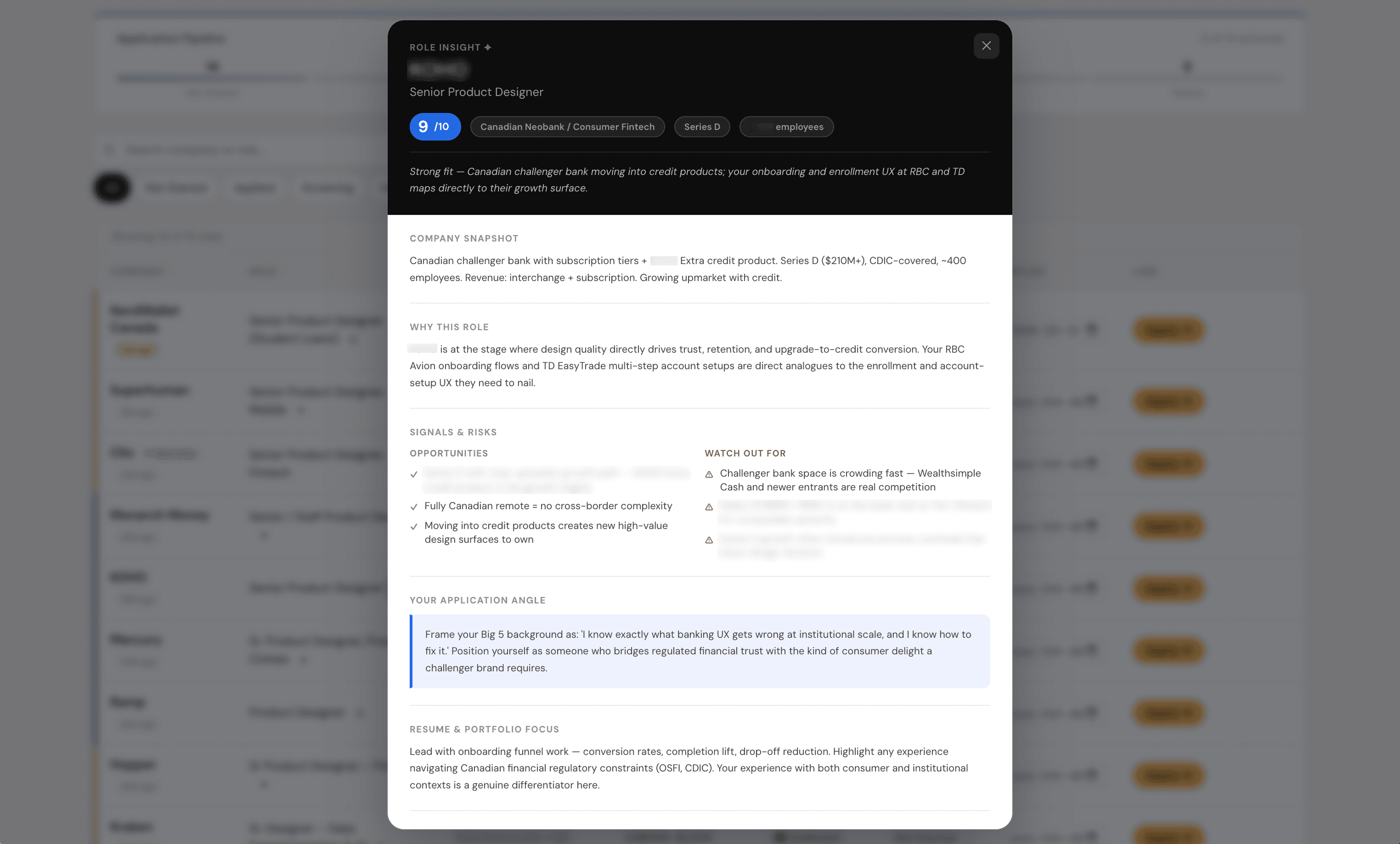
The second was the AI insight. Each role gets a breakdown: company snapshot, why the role is relevant to me specifically, signals and risks, and a suggested application angle. Because the model knows my background, the output is actually contextual — it can tell me that a particular enrollment funnel role maps directly to work I've done, or flag that a company's revenue model introduces risk worth knowing about before I invest time in the process.
The third was phone dispatch. When I come across something interesting while scrolling — a job in a newsletter, a LinkedIn ping, anything — I just hit dispatch in Claude on my phone and drop in the link. The evaluation runs against my criteria and the result lands in either the main tracker or the back pocket, with a clear reason why. The moment of interest and the moment of filing are the same moment.
Reflection
The tool exists because I got tired of spending energy on logistics that shouldn't require energy. Finding jobs isn't the hard part. Figuring out which ones are worth pursuing — and having the right information to pursue them well — is where the time actually goes.
The back pocket turned out to be the feature I use most. A lot of interesting opportunities don't fit the criteria you set before you've seen the market. Having a place for them without noise keeps the decision space clean.
The AI insight only works because it knows who I am. That's the part most tools get wrong — they generate analysis in a vacuum and call it personalization. This one doesn't pretend otherwise.
And I don't update a spreadsheet anymore. I don't have seven tabs open across different tools. I have one local file, on my own device, that fits exactly how I think about my search. The phone dispatch closed the last gap — no more mental notes to follow up on something later. It either goes in the tracker or it doesn't, right then. That's what actually reduces the cognitive load of a job search.
That's the part that's hard to explain until you've built something for yourself — the best tool isn't always the most powerful one. It's the one that disappears into your workflow.